English
 日本語
日本語 한국어
한국어 français
 Deutsch
 Español
 italiano
 русский
 português
 العربية
 Nederland

The amount of food emulsifier kue accounts for about half of the total amount of food additives, making it the most commonly used additive in the food industry. It plays an important role in food production and processing, and nearly all food production and processing involves emulsifier kue or emulsification. Food emulsifier kue is a multifunctional and efficient food additive, which, in addition to having typical surface activity, also has de-foaming, thickening, stabilizing, lubricating, and protecting functions in food.
Food emulsifiers are diverse and are generally classified into natural and synthetic types based on their source. Among these, polyol fatty acid esters are currently the most widely used category in industrial applications.
Within the synthetic emulsifier landscape, sorbitan esters and polysorbates represent a highly effective "golden combination."
l Sorbitan Esters: Characterized by strong lipophilicity with an HLB value typically ranging from 1.8 to 8.6, these are frequently used to construct water-in-oil (W/O) emulsions.
l Polysorbates: Derived from the reaction of sorbitan esters with ethylene oxide, these hydrophilic emulsifiers feature an HLB value between 9.6 and 16.7, making them highly effective for formulating oil-in-water (O/W) emulsions.
In actual industrial production, relying on a single emulsifier often presents limitations. Because sorbitan esters and polysorbates share a highly homologous molecular structure, blending them generates significant synergistic effects at the oil-water interface. This interaction forms a denser protective film, thereby greatly enhancing the stability of both emulsion and dough systems, as well as improving the moisture and oil retention of the final products.
Emulsifier kue, as an efficient food additive, is widely used, and its main functions are as follows:
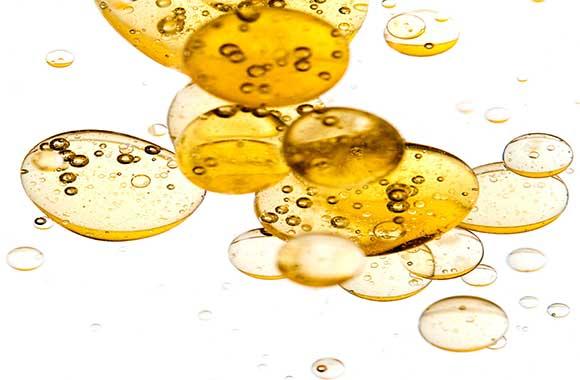
1. Due to the amphiphilic nature of emulsifier kue itself, it can increase the affinity between food components, reduce interfacial tension, improve food quality, and improve the processing performance of food raw materials.
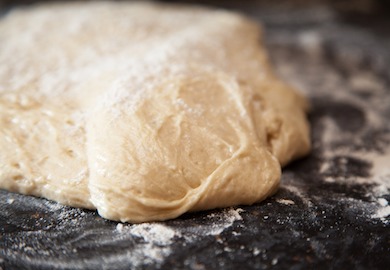
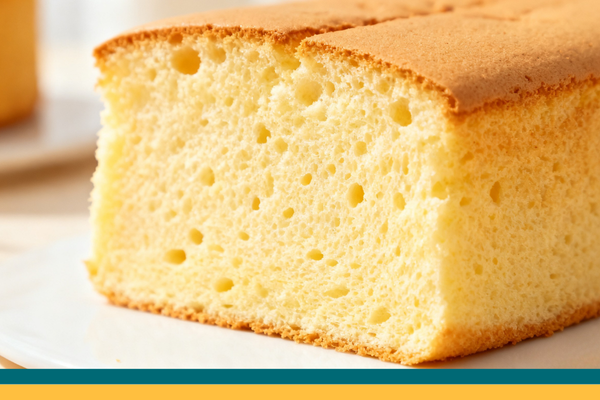
2. It forms complexes with starch, providing better crumb structure, increasing the volume of food, preventing aging, and preserving freshness.
3. Used as a fat crystallization modifier, emulsifier kue controls the crystallization structure of fat in food, improving the mouthfeel quality of the food.
4. It interacts with proteins and fats in raw materials to enhance dough strength.
5. It is used for aeration, stabilizing and improving the structure of bubbles, enhancing the internal structure quality of food, and making the food release fragrance faster.
6. Emulsifier kue improves food water retention, making the product softer and allowing food to gain weight.
7. It replaces expensive ingredients, thus reducing costs.
8. The emulsified nutrients are more easily absorbed by the human body, and some emulsifier kue have bactericidal and preservative effects.
9. It forms a stable structural organization with proteins, preventing moisture loss and preserving freshness in proteins.
10. It forms a sequential chain structure with amylose, fats, oils, proteins, and water-soluble nutrients, reversing the aging speed of fermented dough products or reversing the starch aging speed in various rice and wheat food doughs.
1. The HLB (Hydrophilic-Lipophilic Balance) value of various emulsifier kue is a crucial reference for selecting emulsifier kue. Based on practical experience, emulsifier kue with a slightly higher pH value should be selected, which can achieve the expected effect of improving emulsifier kue stability.
2. The ideal emulsifier kue should have strong affinity for both the aqueous and oily phases. Therefore, in applications, emulsifier kue with high HLB values and low HLB values are often mixed to produce a synergistic effect. Generally, the difference in HLB values between emulsifier kue types should be within 5.
Note: The table below outlines the key physicochemical properties of common Sorbitan Esters and their derivatives. The HLB value (Hydrophile-Lipophile Balance) indicates the emulsifier's affinity: lower values favor Water-in-Oil (W/O) emulsions, while higher values favor Oil-in-Water (O/W) systems. "E Number" refers to the European food additive coding system.
Sorbitan Esters & Polysorbates Specifications
Emulsifier | HLB | E Number | CAS No. |
Span 20 (Sorbitan Monolaurate) | 8.6 | E493 | 1338 - 39 - 2 |
Span 40 (Sorbitan Monopalmitate) | 6.7 | E495 | 26266 - 57 - 9 |
Span 60 (Sorbitan Monostearate) | 4.7 | E491 | 1338 - 41 - 6 |
Span 65 (Sorbitan Tristearate) | 2.1 | E492 | 26658 - 19 - 5 |
Span 80 (Sorbitan Monooleate) | 4.3 | E494 | 1338 - 43 - 8 |
Span 83(Sorbitan sesquioleate) | 3.7 | 8007 - 43 - 0 | |
Span 85(Sorbitan trioleate) | 1.8 | 26266 - 58 - 0 | |
Emulsifier | HLB | E Number | CAS No. |
Polyoxyethylene (20) sorbitan monolaurate | 16.7 | E432 | 9005 - 64 - 5 |
Polyoxyethylene (4) sorbitan monolaurate | 13.3 | 9005 - 64 - 5 | |
Polyoxyethylene (20) sorbitan monopalmitate | 15.6 | E434 | 9005 - 66 - 7 |
Polyoxyethylene (20) sorbitan monostearate | 14.9 | E435 | 9005 - 67 - 8 |
Polyoxyethylene (4) sorbitan monostearate | 9.6 | 9005 - 67 - 8 | |
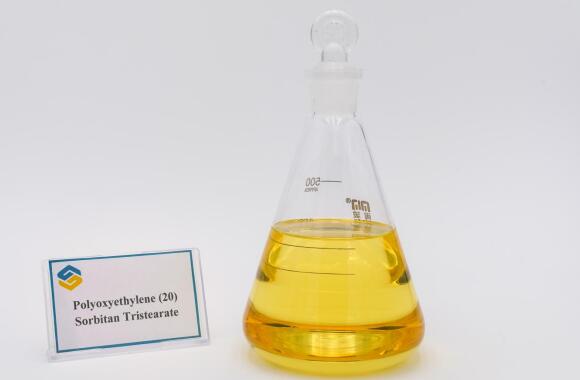
Polyoxyethylene (20) sorbitan tristearate | 10.5 | E436 | 9005 - 71 - 4 |
Polyoxyethylene (20) sorbitan monooleate | 15.0 | E433 | 9005 - 65 - 6 |
Polyoxyethylene (5) sorbitan monooleate | 10.0 | 9005 - 65 - 6 | |
Polyoxyethylene (20) sorbitan trioleate | 11 | 9005 - 70 - 3 |
(Data provided for reference only. Please refer to the Technical Data Sheet (TDS) for exact specifications.)
3. When choosing water-soluble emulsifier kue, the greater the similarity between the emulsifier kue's lipophilic group and the organic solvent structure in the emulsifier kue, the better the emulsification effect and the smaller the required amount.
4. In use, emulsifier kue should be combined with thickeners and relative density regulators to enhance the stability of the emulsifier kue.
FAQ
Q1: How do I quickly determine whether to use a high or low HLB emulsifier for my product line?
A: The key lies in the "like dissolves like" principle.
If you are formulating an oil-in-water (O/W) system—such as ice cream, plant-based beverages, or bread doughs—you should opt for a hydrophilic emulsifier with an HLB value ranging from 9.6 to 16.7. Polysorbate, a hydrophilic non-ionic emulsifier, is an ideal choice here.
Conversely, for water-in-oil (W/O) systems like margarine, shortening, or butter, a lipophilic emulsifier with an HLB value between 1.8 and 8.6 is required. Sorbitan fatty acid ester, a lipophilic non-ionic emulsifier, fits this profile perfectly.
Q2: Why does the dough still lack extensibility and the final product suffer from poor anti-staling effects, even when food emulsifiers are added strictly according to the formula?
A: This issue typically stems from suboptimal synergistic blending ratios and inadequate activation processes within the dough. In complex baking systems, relying on a single emulsifier often leads to performance bottlenecks.
1. Synergistic Blending Strategy
Sorbitan esters are highly lipophilic (HLB 1.8–8.6), whereas polysorbates are highly hydrophilic (HLB 9.6–16.7). It is recommended to adopt a synergistic blending strategy based on structural similarity—such as combining sorbitan monostearate (S60) with polysorbate 60. By adjusting the ratio of these two emulsifiers, formulators can precisely target the desired HLB value. This synergy creates a denser protective film at the oil-water interface.
2. Critical Activation Process
Additionally, the activation process is critical. Emulsifiers must be properly prepared to effectively form inclusion complexes with amylose in the dough (which retards starch retrogradation and maintains softness) and to improve the gluten network structure. To achieve this:
Pre-mix with fats: Ensure the emulsifier is pre-mixed with oils or fats.
Optimal temperature dispersion: Thoroughly disperse the emulsifier at optimal temperatures.
Note: Even with a perfectly accurate formula, uneven dispersion or insufficient temperatures will prevent the emulsifier from delivering its true benefits in enhancing dough extensibility and increasing the volume of the final baked goods.
Q3: How can I ensure the compliance of food emulsifiers and verify that the procured products fully meet production standards?
A: During the incoming inspection, always request the Certificate of Analysis (COA) for the latest batch from your supplier and focus on verifying the following key parameters:
First, confirm that the ingredients are listed within the permitted scope of the National Food Safety Standard for Uses of Food Additives (GB 2760).
Second, verify that the heavy metal and microbial testing results are fully compliant.
Third, ensure the product is backed by comprehensive certifications (such as ISO 22000, ISO 9001, Halal, Kosher, and FSSC 22000). These credentials not only guarantee regulatory compliance but also serve as essential passes for exporting end products or entering premium market channels.
Huana Chemistry offers Sorbitan esters and Polysorbates. Since 1993, our products have been distributed in over 70 countries. Our products can meet the requirements for food-grade, cosmetic-grade, feed-grade, and industrial applications.
Packaging: 25kg/drum,220kg/drum and 1000kg/drum(special packaging is available upon request)
Certifications: ISO 9001, ISO 22000, ISO45001, ISO14001, Halal, Kosher
We provide free samples, with a minimum order quantity of 25 kg,offer complete technical documentation (COA, TDS, MSDS), and ship within 14 days after order confirmation. Welcome to contact us!